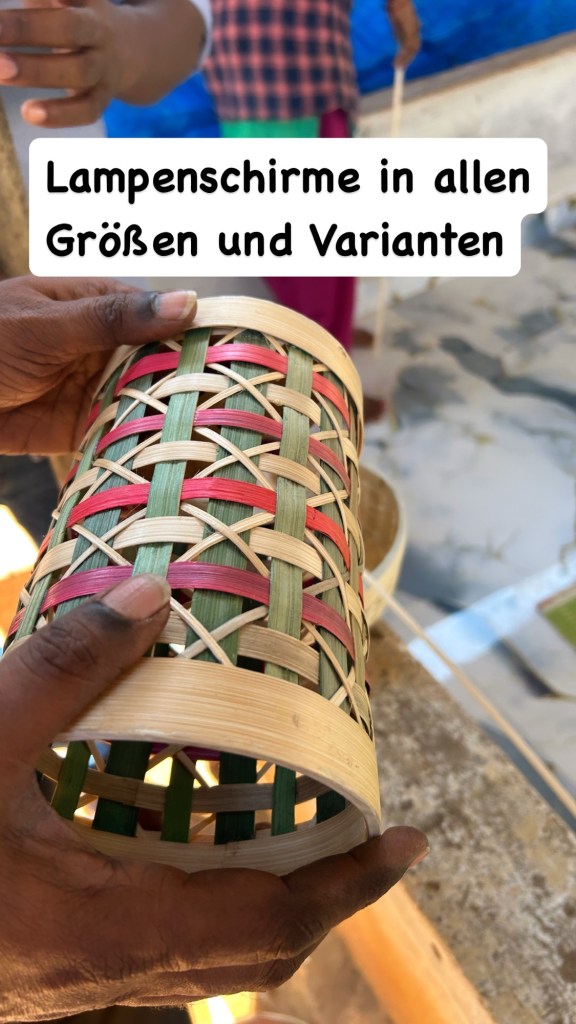
Today, we visited a recently opened center in Mankarai ( close to Coimbatore) where tribal women are trained in Bamboo products and note book making – just to mention those income generating ideas among many others.

The products are sold to schools and local tourists who come here especially during the weekend to spend some relaxing days in the resorts.

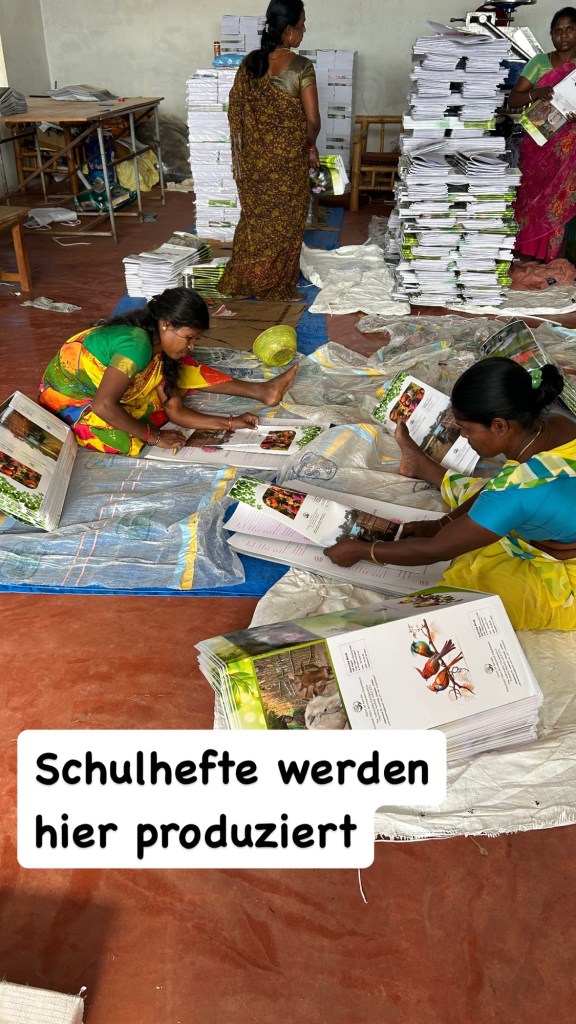
For the women who live close to the poverty line this center is not just a place where to find a job, but also a place where they can learn, share and grow.
Do you like the products?


Interested to learn more about bamboo in vulnerable communities?
Bamboo products can play a significant role in supporting vulnerable communities by providing economic opportunities, promoting environmental sustainability, and enhancing resilience to climate change. Here’s how:
1. Economic Empowerment
• Job Creation: Bamboo-based industries (furniture, handicrafts, textiles, paper, construction) can create jobs, especially for women and marginalized groups.
• Micro-Enterprise Development: Small-scale businesses can thrive by producing bamboo baskets, furniture, home decor, and eco-friendly utensils.
• Market Access: Governments and NGOs can facilitate fair trade and export opportunities for artisans and small businesses.
2. Environmental Benefits
• Sustainable Resource: Bamboo grows rapidly and regenerates, making it a renewable alternative to timber.
• Carbon Sequestration: Helps combat climate change by absorbing CO₂.
• Erosion Control: Its roots stabilize soil, preventing landslides and desertification.
3. Affordable and Durable Housing
• Disaster-Resilient Homes: Bamboo structures are flexible and earthquake-resistant, suitable for flood-prone and seismic regions.
• Low-Cost Construction: Bamboo is cheaper than concrete and steel, making it accessible for low-income communities.
4. Bamboo for Climate Adaptation
• Alternative Energy Source: Can be processed into charcoal, pellets, or biofuel, reducing dependence on deforestation-driven firewood.
• Water Purification: Bamboo charcoal can filter water in areas lacking clean drinking sources.
5. Health and Well-being
• Eco-friendly Products: Bamboo toothbrushes, sanitary products, and textiles provide biodegradable alternatives to plastic.
• Medicinal Uses: Some bamboo species have antibacterial and anti-inflammatory properties used in traditional medicine.
And did you know? With over 136 species of bamboo found across the country, India is the second-largest bamboo producer in the world (after China), covering nearly 16 million hectares of forest land. Bamboo is deeply embedded in Indian culture, livelihoods, and industries.
 Go India, go future!