First Harvest! Zero Dumping Waste Management in Action from Food and Vegetable Waste
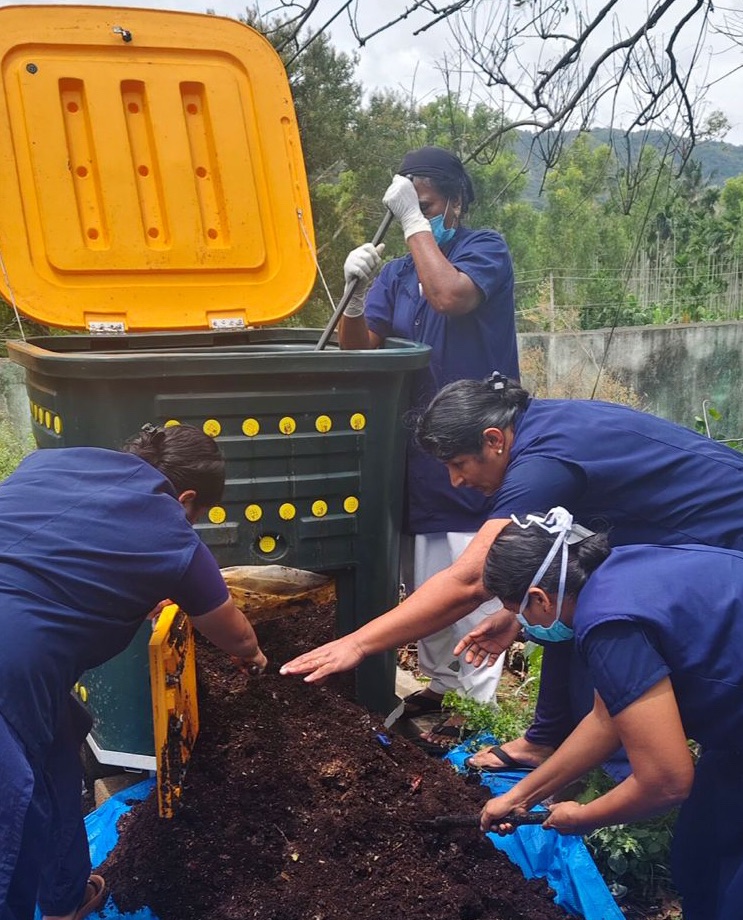
After just 50 days of hands-on learning and community dedication, something remarkable has taken root — not just in the soil, but in the mindset of three unique locations in Southern India. We’re proud to celebrate the first harvest from our Zero Dumping Waste Management Programme, carried out at:
Attappadi Taluk Government Tribal Specialty Hospital, Kottathara Chinna Jambhukandi Tribal Village, and Karl Kübel Institute for Development (KKID), Coimbatore
What began as an idea to reduce organic waste has now blossomed into a model that connects environmental care with human health and dignity.
🍅 Why This Matters: Waste, Health, and Hope
In healthcare and community settings, managing food and vegetable waste is often an overlooked challenge. But what if that waste wasn’t discarded — what if it could heal?
With support from Karl Kübel Foundation for Child and Family (KKF), India, and Making More Health, Germany, and through expert training delivered by Nilayaan, the project empowered hospital staff, institute teams, and tribal community members to rethink waste.
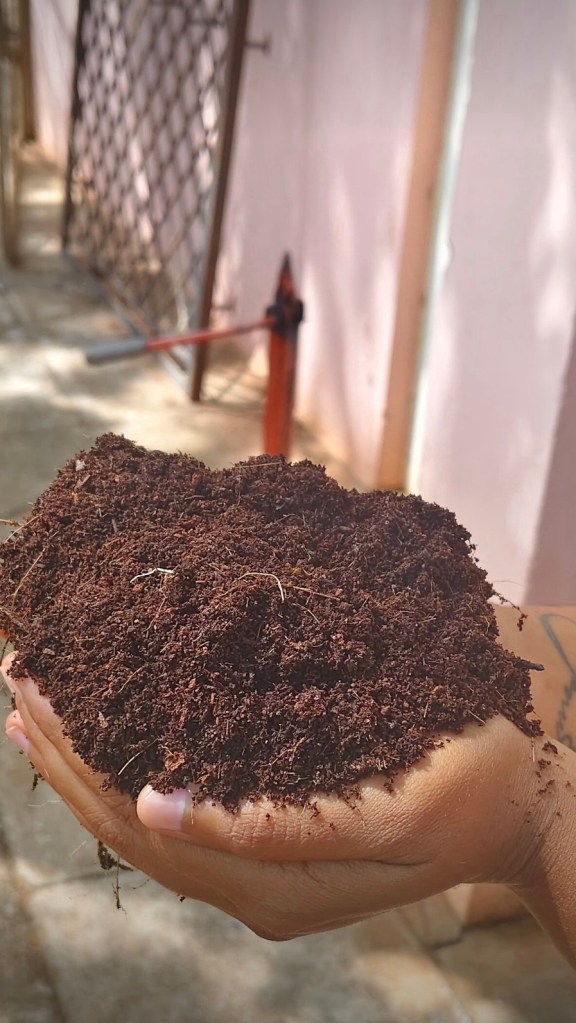
They didn’t just learn how to compost — they learned how to create a healthier ecosystem around them. By turning food waste into nutrient-rich compost, local gardens can now thrive with chemical-free, cost-effective, and locally produced nourishment.
This isn’t just about growing food. It’s about growing well-being. In hospital gardens, that means healing environments. In communities, it means self-reliance, nutrition, and cleaner surroundings.
🌿 What We Achieved — Together
Over the past 50 days, this initiative has delivered concrete, sustainable outcomes:
✅ Practical training on waste-to-manure processes
✅ Staff-led composting in hospitals, institutes, and villages
✅ First successful harvest from fully organic compost
✅ Creation of greener, healthier spaces for patients and families
✅ A shift in mindset — from dumping waste to valuing it
🌱 A Seed of Systemic Change
This is more than a composting project. It’s a systemic shift that links health, environment, and empowerment at every level. Whether it’s a tribal hospital staff member monitoring a compost pile, or a community elder harvesting vegetables grown on revitalized soil — every action contributes to a cycle of care.
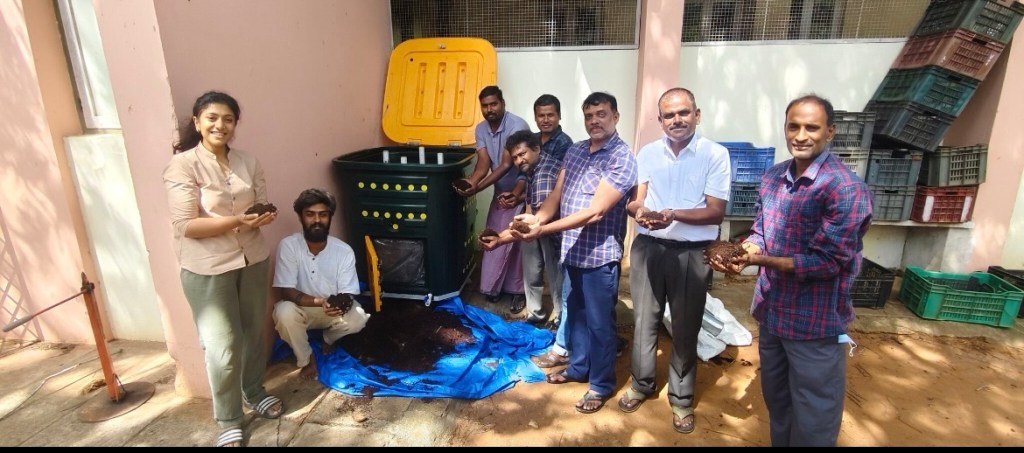
As this model scales, it can become a replicable blueprint across India and beyond, especially in places where health systems and communities intersect with environmental stress.
From zero dumping to first harvest — this is what happens when we treat waste not as a problem, but as part of the solution.
Let’s keep growing, together. 💚
First Harvest! Zero Dumping Waste Management in Action from Food and Vegetable Waste
After just 50 days of hands-on learning and community dedication, something remarkable has taken root — not just in the soil, but in the mindset of three unique locations in Southern India. We’re proud to celebrate the first harvest from our Zero Dumping Waste Management Programme, carried out at:
Attappadi Taluk Government Tribal Specialty Hospital, Kottathara Chinna Jambhukandi Tribal Village, and Karl Kübel Institute for Development (KKID), Coimbatore
What began as an idea to reduce organic waste has now blossomed into a model that connects environmental care with human health and dignity.
🍅 Why This Matters: Waste, Health, and Hope
In healthcare and community settings, managing food and vegetable waste is often an overlooked challenge. But what if that waste wasn’t discarded — what if it could heal?
With support from Karl Kübel Foundation for Child and Family (KKF), India, and Making More Health, Germany, and through expert training delivered by Nilayaan, the project empowered hospital staff, institute teams, and tribal community members to rethink waste.
They didn’t just learn how to compost — they learned how to create a healthier ecosystem around them. By turning food waste into nutrient-rich compost, local gardens can now thrive with chemical-free, cost-effective, and locally produced nourishment.
This isn’t just about growing food. It’s about growing well-being. In hospital gardens, that means healing environments. In communities, it means self-reliance, nutrition, and cleaner surroundings.
🌿 What We Achieved — Together
Over the past 50 days, this initiative has delivered concrete, sustainable outcomes:
✅ Practical training on waste-to-manure processes
✅ Staff-led composting in hospitals, institutes, and villages
✅ First successful harvest from fully organic compost
✅ Creation of greener, healthier spaces for patients and families
✅ A shift in mindset — from dumping waste to valuing it
🌱 A Seed of Systemic Change
This is more than a composting project. It’s a systemic shift that links health, environment, and empowerment at every level. Whether it’s a tribal hospital staff member monitoring a compost pile, or a community elder harvesting vegetables grown on revitalized soil — every action contributes to a cycle of care.
As this model scales, it can become a replicable blueprint across India and beyond, especially in places where health systems and communities intersect with environmental stress.
From zero dumping to first harvest — this is what happens when we treat waste not as a problem, but as part of the solution.
Let’s keep growing, together. 💚
 Go India, go future!